

POSTED BY:
COMMENTS:
0
POST DATE:
For the average Nigerian—the freelancer, the student trying to pay for a course, the small business owner needing software, or even you, just trying to pay for Netflix without stress—this is more than an inconvenience. It's a barrier to growth and global access. You need a way to manage your finances without these headaches. Get more insights on effective money management on our platform, SharpCollect.
But where there is a problem, the Nigerian spirit finds a solution. Enter the fintech gladiators: Grey.co and Payday. These two platforms have become the go-to champions for anyone needing a reliable virtual dollar card. They promise a seamless way to pay for anything online, in dollars, from the comfort of your home in Lagos, Abuja, or Port Harcourt.
But who does it better? Whose fees will chop your money the least? And which one is right for your specific hustle? This Grey vs Payday comparison will cut through the hype. Let’s put them in the ring for a no-holds-barred showdown.
Verdict: This is a tricky one. For small, frequent top-ups (e.g., $15 for Netflix), Grey's 1% fee (15 cents) is cheaper than Payday's $1 flat fee. For larger top-ups (e.g., $200 for a course), Payday's free funding is the clear winner. However, the exchange rate is the real kingmaker. Payday often has a slightly more favourable rate, but you must always check both apps before committing. Let's call this a slight win for Payday due to its free funding on larger amounts, but with a major caveat: ALWAYS CHECK THE FX RATE.
The Core Problem: Why Your Naira Card is Useless for International Payments
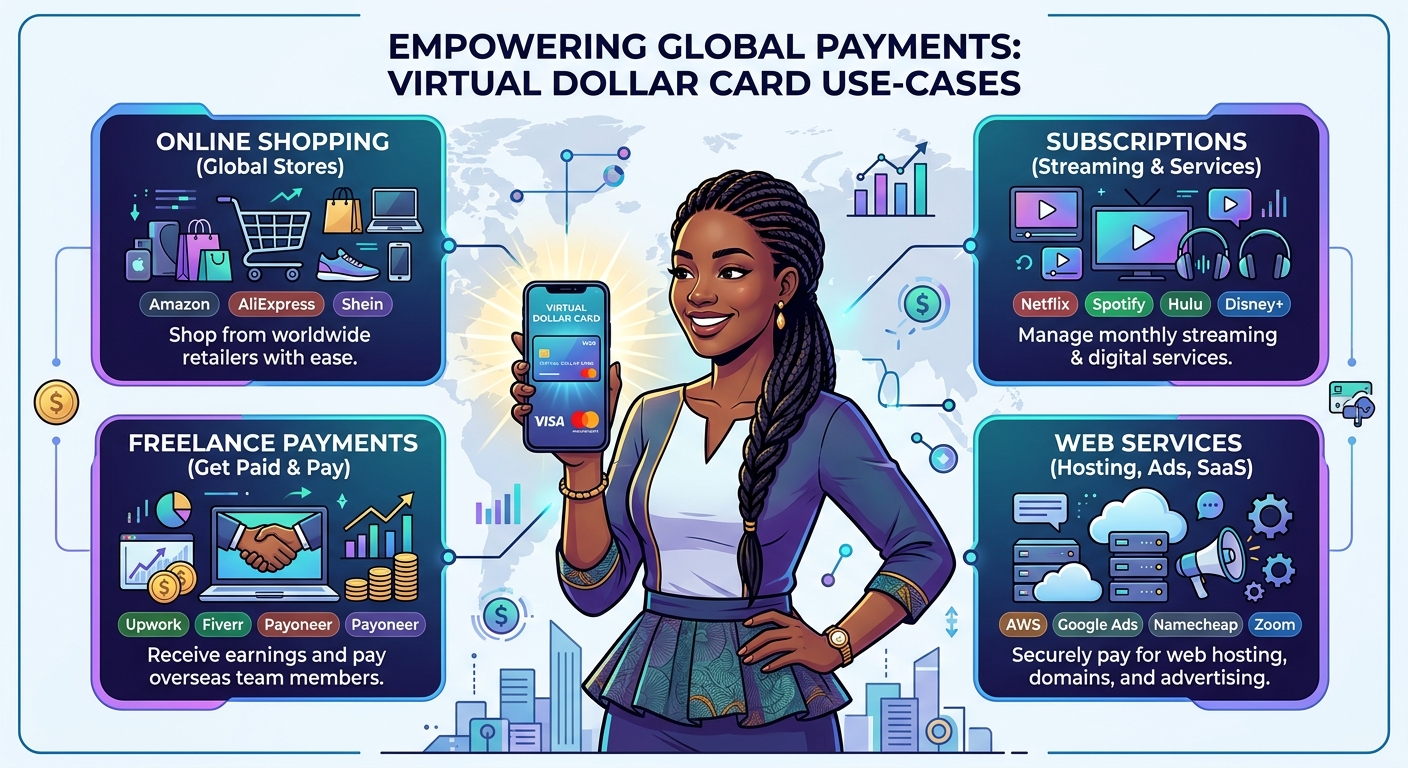
Before we dive in, let's be clear on why we're even having this conversation. A few years ago, you could use your GTB or Zenith Bank Naira Mastercard to pay for almost anything online. Today, that's a distant memory. The CBN, in a bid to manage Nigeria's dwindling foreign exchange reserves, has slashed the international spending limit on Naira cards to as low as $20 per month—and for many banks, it’s effectively $0. This policy, as reported by major financial news outlets, means your Naira card is practically useless for:- Subscriptions: Netflix, Spotify, Apple Music, Canva Pro.
- E-commerce: Shopping on Amazon, ASOS, or AliExpress.
- Work Tools: Paying for web hosting, SaaS software like Slack or Adobe Creative Cloud.
- Education: Enrolling in courses on Coursera or Udemy.
- Ad Spend: Running Facebook or Google ads for your business.
Meet the Contenders: A Quick Look at Grey.co and Payday
Grey.co: Positioned as a platform for the "global digital nomad," Grey offers more than just a virtual card. Its core strength lies in providing foreign bank accounts (USD, EUR, GBP) for receiving international payments. The virtual card is a powerful feature within this broader ecosystem. Payday: Launched with a laser focus on solving the cross-border payment problem for Africa, Payday is often seen as the more direct, accessible virtual dollar card provider. Its branding is slick, and it targets a younger, tech-savvy audience who need a quick solution for online payments.
Round 1: Account Creation & Onboarding Experience
Your first impression of any app is the sign-up process. If it’s stressful, you’ll likely abandon it.- Grey.co: The sign-up is straightforward. You'll need your email, phone number, and a government-issued ID (NIN, Driver's License, etc.) for KYC (Know Your Customer) verification. The verification process can sometimes take a few hours, which might be a slight delay if you're in a hurry.
- Payday: Payday's onboarding is famously quick. The app design is intuitive, and the verification process often feels faster. They also require your standard details and ID. For a user who needs a card right now to complete a payment, Payday often wins on speed.
Round 2: Funding Your Virtual Dollar Card
A card is useless if you can't put money on it. This is arguably the most critical part of the user experience.- Grey.co: Funding is primarily done via NGN bank transfer to a designated account. You send Naira, and it reflects in your NGN wallet on the app. From there, you can easily swap it to your USD wallet at their prevailing rate to fund your card. The process is reliable but involves a couple of steps (transfer, then swap).
- Payday: Payday offers a similar bank transfer method. However, they've also been known to integrate more direct P2P (peer-to-peer) or third-party payment options, which can sometimes offer more flexibility. The key here is the exchange rate at the point of funding.
Round 3: Comparing Fees and NGN to USD Exchange Rates
This is where the Central Banker in me comes out. Let’s follow the money. A "free" service can end up being expensive if the fees are hidden in the exchange rates.| Fee/Charge | Grey.co | Payday | Segun's Analysis |
|---|---|---|---|
| Card Creation Fee | $3 (one-time) | $3 (one-time) | Standard industry practice. No winner here. |
| Funding Fee (Card) | 1% of the amount | $1 flat fee per top-up below $100, free above | Payday is cheaper for larger top-ups, Grey is cheaper for tiny ones. |
| Transaction Fee | $0 | $0 | Both are excellent here. No hidden charges per swipe. |
| NGN to USD Exchange Rate | Black Market Rate + Margin | Black Market Rate + Margin | This is the most important "fee." Both use a rate close to the parallel market, but it varies daily. You MUST compare their rates in-app before funding. A ₦10 difference per dollar adds up quickly. |
| Card Maintenance | $0/month | $0/month | Good. No monthly charges for just holding the card. |
Round 4: Virtual Card Features & Spending Limits
What good is a card if it gets declined or has low limits?- Grey.co: The Grey virtual card is a Mastercard. It’s widely accepted on most international platforms like Amazon, Netflix, Spotify, and AWS. The default limits are quite generous, often starting at around $5,000 per month, which is sufficient for most users.
- Payday: Payday also offers a Mastercard (and sometimes a Visa option). It is also widely accepted. However, historically, users have reported slightly more issues with Payday cards on certain "high-risk" sites like those for betting or specific financial services. Their spending limits are also robust, but can sometimes require additional verification for increases.
Round 5: Beyond the Card - Receiving International Payments
This is where we separate the boys from the men. Are you just a card provider, or a full financial partner?- Grey.co: This is Grey's trump card. With Grey, you can generate virtual international bank accounts in USD (via ACH & Wire), GBP (via BACS), and EUR (via SEPA). If you are a freelancer on a platform like Upwork, a remote worker getting paid from the UK, or a creator receiving YouTube ad revenue, this is a game-changer. You can receive money directly into these accounts like a local, then convert it to Naira.
- Payday: While Payday has remittance features, it doesn't offer the dedicated, named foreign accounts that Grey does. Its ecosystem is more focused on the card and sending money across Africa. It’s simpler, but less powerful for anyone earning in foreign currency.
Are There Other Alternatives to Grey and Payday?
It would be unfair to ignore other players in the booming African fintech space. Chipper Cash was a pioneer in this space, but they've faced regulatory and operational challenges that have made their virtual card service less reliable recently. Other platforms like Eversend also offer similar services. However, in terms of current reliability, market buzz, and feature robustness for the Nigerian user, this Grey vs Payday review shows they are clearly the top two contenders right now.Final Verdict: Which Virtual Card is Best for You?
There is no single "best" card. The best card is the one that fits your needs like a glove. So, here is my final recommendation, broken down by your hustle:- For the Freelancer, Remote Worker, or Creator: Go with Grey.co. No contest. The ability to receive international payments directly into your own USD, GBP, or EUR account is a massive advantage that Payday cannot match. The card is just the tool you use to spend the money you've earned. Grey owns this market.
- For the Student and Subscription King/Queen: Lean towards Payday. If your primary need is paying for Netflix, Spotify, Apple Music, and maybe a Coursera subscription, Payday's fast onboarding and potentially better FX rate on small amounts make it very attractive. The interface is simple, and it gets the job done without the complexity of foreign accounts you don't need.
- For the Small Business Owner & E-commerce Buyer: This is a toss-up, but I'd give the edge to Grey.co. While Payday's free funding over $100 is great for buying goods, Grey's slightly more reliable card acceptance on a wider range of merchant sites (like web hosting and ad platforms) gives it a professional edge. The higher limits are also a plus.
