

POSTED BY:
COMMENTS:
0
POST DATE:
You Know This Feeling, Don't You? It is the 8th of the month. Your salary just landed. But before you even exhale, your phone is already buzzing.
FairMoney: "Your repayment of ₦18,500 is due today."
Carbon: "Avoid late fees — pay ₦23,000 now."
PalmCredit: "Your loan is overdue. Pay ₦11,200 immediately."
By the time you finish paying, your account balance looks like a cry for help. You have ₦7,000 left to survive 22 more days. So what do you do? You open Branch. You borrow again. The cycle continues.
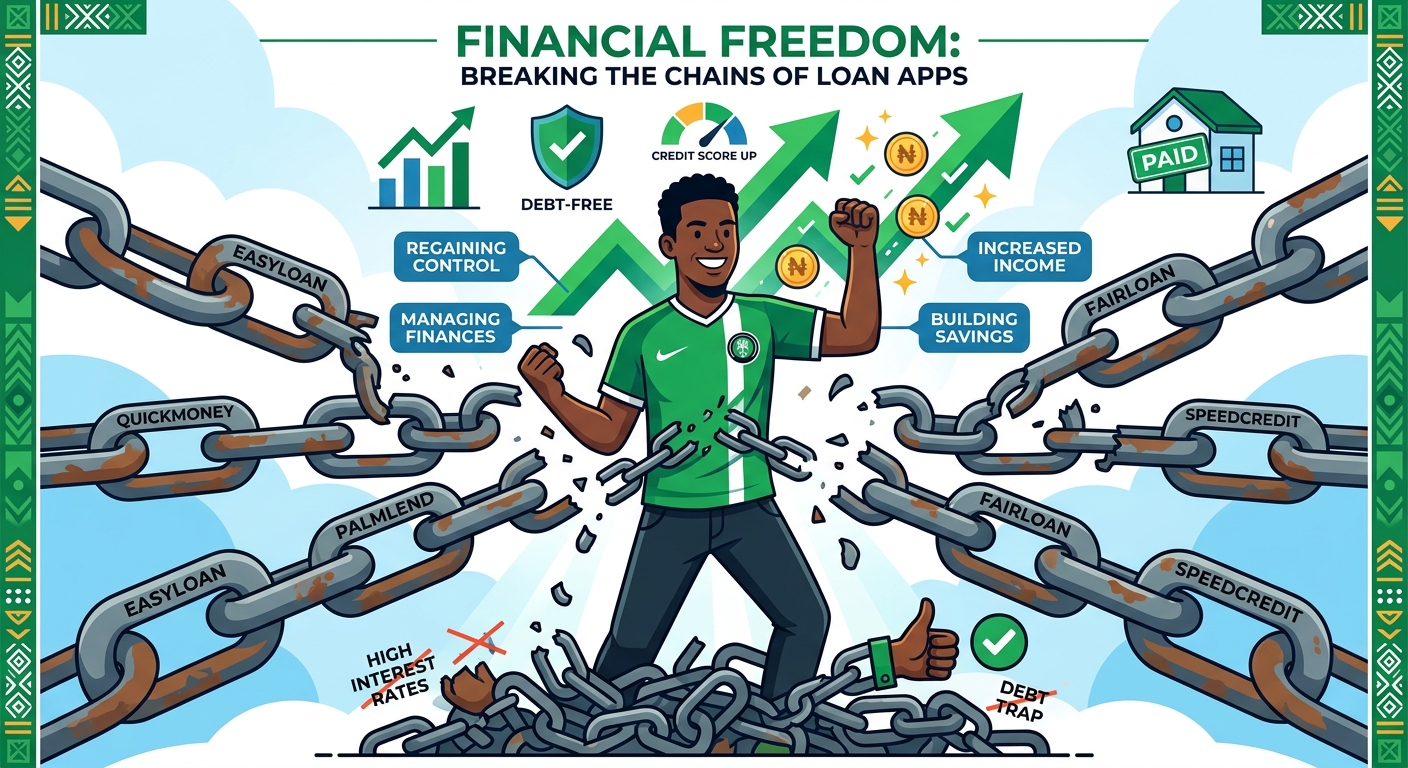
This is the debt trap loan apps Nigeria has built around millions of hardworking people — civil servants, teachers, junior bankers, market traders — smiling at work like everything is fine while their finances collapse quietly from the inside.
This article will not shame you. It is your survival guide out. Every strategy here is specific, actionable, and built for the Nigerian salary earner.
That is ₦44,000 out of ₦85,000 — more than 51% of your salary — leaving your account on payday before you buy a grain of rice, pay for transport, or recharge your data.
You have ₦41,000 left to survive the entire month. And that number shrinks every cycle because you borrow slightly more each time to compensate for the growing shortfall.
This is no longer a money management problem. This is a structural collapse of your monthly cash flow. It will not fix itself. You need a deliberate strategy starting today.
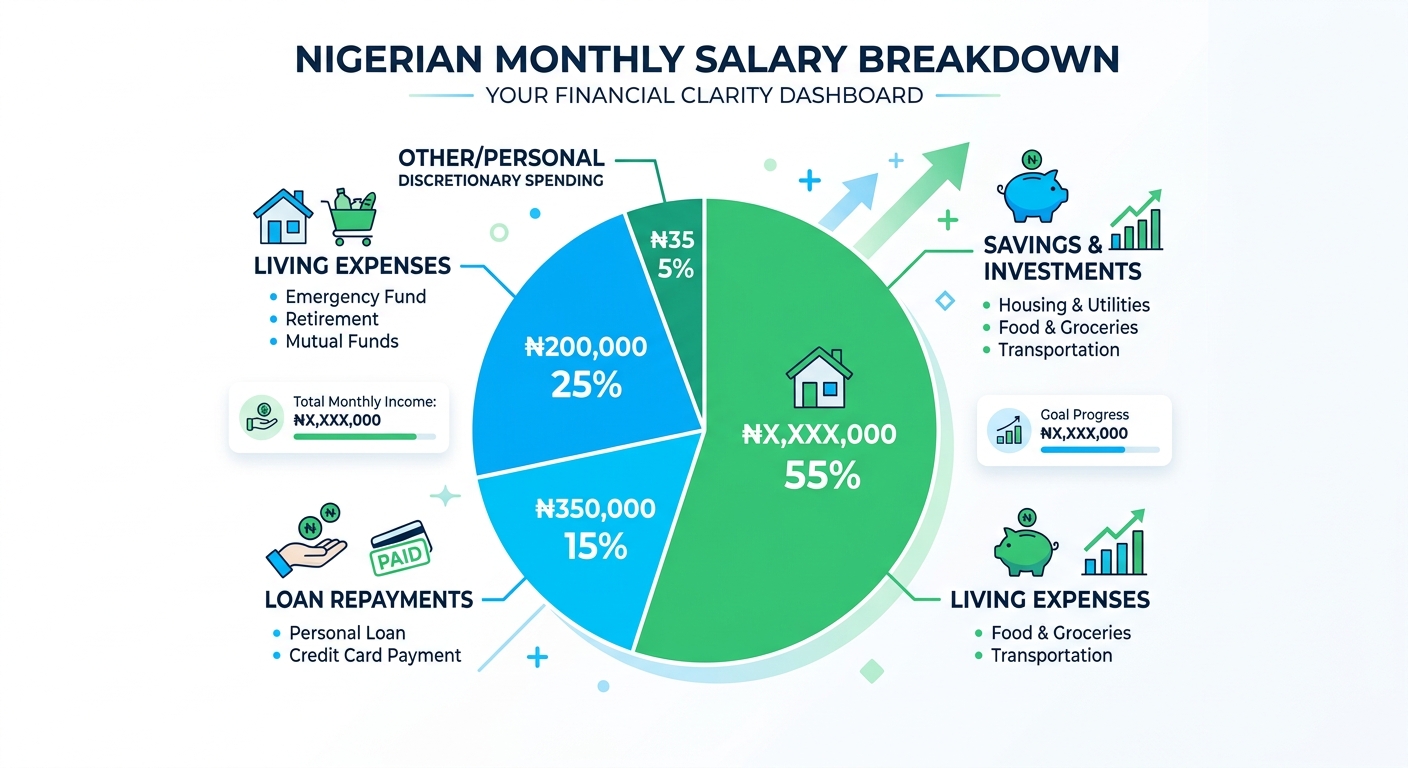
The transformative figure is the 20% savings allocation. If you cannot start at 20%, start at 5% — and automate it immediately using Piggyvest, Cowrywise, or a fixed deposit at your bank. The money must leave your account before you see it, because what your eyes do not see, your hands will not spend.
Once you have saved even ₦30,000–₦50,000 as an emergency buffer, you will stop seeing loan apps as your only option when life unexpectedly hits. That savings buffer is your permanent exit visa from the debt trap loan apps Nigeria profits from.
Need help recovering money owed to your own business while you get your personal finances back in order? Visit SharpCollect — Nigeria's professional debt recovery platform.
What Is a Debt Trap Loan Apps Nigeria Salary Earners Fall Into?
The debt trap loan apps Nigeria users fall into happens when your borrowing grows faster than your income — and you start using new loans to repay old ones instead of solving the original problem. It starts innocently. A genuine emergency: your child's school fees, a medical bill, your landlord threatening to lock the gate. You borrowed ₦15,000. Fair enough. But repayment took a chunk of next month's salary. So you were short again. You borrowed again — slightly more. And slightly more the next time. Before long, you are not borrowing for emergencies. You are borrowing just to survive the month. And every month, the loans are getting bigger while your financial breathing room is getting smaller. That is the trap. And the uncomfortable truth is: the apps are designed to keep you there.📌 If you run a small business and customers owe you money, SharpCollect helps businesses recover debts in Nigeria without the drama.
Warning Signs You Are Already Inside a Debt Trap
Be brutally honest with yourself against this checklist:- ✅ You have active loans on two or more loan apps simultaneously
- ✅ On payday, more than 40% of your salary goes straight to repayments
- ✅ You borrow money before your salary even arrives
- ✅ You have borrowed from one app to repay another
- ✅ You have started hiding your loan activity from your spouse or family
- ✅ Your increasing loan limit feels like good news rather than a warning sign
- ✅ You feel physical anxiety every time a bank notification sound goes off
- ✅ You cannot state the exact total amount you currently owe across all platforms
Why Loan Apps Make It So Easy to Fall In
These platforms are not charities. They are venture-capital-backed businesses optimised for repeat borrowing. Understanding their mechanics is the first step to outsmarting them and breaking free from the debt trap loan apps Nigeria has normalised.Speed Removes Your Thinking Time
Getting ₦20,000 in 60 seconds at 2am bypasses every rational filter in your brain. Emergency emotions override logic every time. That is not an accident — it is deliberate product design.Increasing Credit Limits Feel Like Promotions
When PalmCredit messages you "Congratulations! Your limit has increased to ₦80,000," it feels like a reward. It is actually an invitation to go deeper into debt. The CBN has issued guidelines on digital lending transparency precisely because of these aggressive practices — but many apps continue to push the boundaries.Rollover Loans Feel Like Relief
Some apps let you extend or take a new loan before repaying the old one. It feels helpful in the short term. You are actually compounding interest on top of interest — a mathematically brutal position that deepens the debt trap loan apps Nigeria is known for.Harassment Normalises Borrowing as a Lifestyle
Once repaying under pressure and borrowing again becomes your monthly rhythm, it starts to feel normal. It is not a financial strategy. It is a hamster wheel — and the wheel spins faster every month you stay on it.The Real Math: What Multiple Loans Are Actually Costing You
Let us put hard naira numbers to this. Assume you earn ₦85,000 per month — common for a junior civil servant or entry-level private sector worker in Lagos or Abuja.| Loan App | Amount Owed | Monthly Repayment | Effective Interest |
|---|---|---|---|
| FairMoney | ₦25,000 | ₦20,000 | ~20% |
| Carbon | ₦18,000 | ₦14,400 | ~18% |
| PalmCredit | ₦12,000 | ₦9,600 | ~22% |
| Total | ₦55,000 | ₦44,000 | — |
The Debt Snowball Method (Nigerian Edition)
The Debt Snowball is a globally proven repayment framework, popularised by Dave Ramsey's financial work. Here is how it applies directly to someone escaping the debt trap loan apps Nigeria has created around salary earners.Step 1: Write Down Every Single Loan
App name. Exact current balance. Monthly repayment. Due date. No estimates. No rounding. Face the full picture completely.Step 2: Rank From Smallest Balance to Largest
Not by interest rate — by total outstanding balance owed right now.Step 3: Pay Minimum on Everything Except the Smallest Loan
On the smallest loan, throw every extra naira you can find — whatever you saved from cutting expenses that month.Step 4: When the Smallest Loan Is Dead, Redirect That Payment
Celebrate briefly. Then take the money you were paying on that cleared loan and stack it directly onto the next smallest. Your payment power snowballs progressively. Real Nigerian Example: Clear that ₦12,000 PalmCredit loan in month one. You suddenly have ₦9,600 extra per month. Stack that onto Carbon repayments — now you are paying ₦24,000 per month toward Carbon. That loan is gone in weeks, not months. The momentum builds both psychologically and financially. This is not magic. This is discipline doing mathematics — and winning against the debt trap loan apps Nigeria sets.How to Negotiate With Loan Apps Without Losing Your Mind
Most people do not know this: some loan apps will negotiate if you communicate early and proactively. If you cannot meet a repayment deadline, do not disappear. Do not ignore the notification. Hiding destroys your credit score and invites the harassment calls to your contacts that every Nigerian dreads. Instead, use this approach:- Contact customer support before the due date — never after you have already defaulted
- Explain your situation factually and calmly. Request an extension or restructured repayment schedule
- Carbon and FairMoney have historically shown flexibility for borrowers with clean prior histories who hit documented genuine emergencies
- If they offer an extension, read every new term carefully before accepting — some extensions simply roll your existing interest into a new, larger principal. Know your actual new repayment figure in naira before you agree.
Emergency Moves When You Are Drowning in Repayments
Sometimes the situation is so compressed that structured strategy feels like a luxury you cannot afford right now. If that is where you are today, here are emergency-level moves that work immediately.Stop Suffering Quietly — Call a Family Meeting
Many Nigerians are struggling silently while relatives who could genuinely help have no idea. A family loan at zero percent interest — even ₦30,000 from a sibling or parent — is infinitely better than another app loan at 20% monthly. Pride is expensive when you are inside a debt trap.Use a Cooperative (Ajo or Esusu)
If you are a salary earner or civil servant, your workplace or union likely runs a cooperative savings scheme. Cooperative loans typically charge 5–10% — a fraction of what the debt trap loan apps Nigeria charges. Many civil servants in Abuja and Lagos access cooperative loans through their ministries and have no idea this option exists.Speak to Your HR or Payroll Department
Salary advances are a real option in many Nigerian companies. You are essentially borrowing from your own future earnings at zero or near-zero interest. Ask your employer before you open another loan app.Sell Something
That gadget collecting dust in your drawer. Clothes you have not worn in a year. Something listed on Jiji. A one-time ₦15,000–₦30,000 from liquidating something you own can eliminate your smallest loan entirely and break the cycle momentum.Slash Your Standard of Living — Temporarily
Cancel subscriptions. Cook at home. Cut from DSTV to free-to-air. Take BRT instead of Uber. These are not permanent life choices — they are tactical retreats that fund your financial recovery. Six weeks of intentional discomfort can buy you months of genuine breathing room.How to Rebuild Your Budget After Escaping the Debt Trap
Once you start breaking free from the debt trap loan apps Nigeria has built around you, the next critical move is ensuring you never return. That requires rebuilding your monthly budget from scratch with a clear structure. Use the 50-30-20 Rule, Nigerian Version:| Category | Percentage | On ₦85,000 Salary |
|---|---|---|
| Needs (rent, food, transport, school fees, bills) | 50% | ₦42,500 |
| Wants (data, outings, subscriptions, lifestyle) | 30% | ₦25,500 |
| Savings and Emergency Fund | 20% | ₦17,000 |
📌 If you run a small business and customers owe you money you cannot recover, SharpCollect provides professional debt recovery services in Nigeria that protect your business without burning relationships.
Protecting Yourself: Your Personal Rules Before Borrowing Again
This is your borrowing constitution going forward. Screenshot it. Tape it near your phone charger.Rule 1: The 48-Hour Rule
Never borrow in an emotional or panicked moment. Wait 48 hours before hitting apply. If the need is still urgent after 48 hours, it is legitimate. If the urgency has faded, you just saved yourself from a costly bad decision.Rule 2: The 20% Income Rule
No loan should carry a monthly repayment exceeding 20% of your monthly income. On ₦80,000, your maximum monthly repayment is ₦16,000 — nothing above that. Anything higher and you are structuring yourself directly back into the debt trap loan apps Nigeria relies on.Rule 3: One Loan at a Time
No new loan before the current one is fully cleared. No exceptions. No emergency exceptions. No "just this once" exceptions.Rule 4: Read the Total Repayment in Naira — Not the Percentage
If you borrow ₦20,000 and pay back ₦26,000 — that ₦6,000 is your true cost. The percentage figure the app shows is designed to make the cost feel abstract and manageable. The naira figure is real and should be the only number that matters to you.Rule 5: Build Your Emergency Fund Before the Next Emergency Arrives
Every month you survive without touching your emergency fund is a month you did not need a loan app. That fund is your personal financial immune system against the debt trap loan apps Nigeria depends on for its revenue.Sapa Is Not Your Destiny
The debt trap loan apps Nigeria has constructed around salary earners is real, deliberate, and profitable — for them. It has consumed too many hardworking Nigerians who earn decent money but have nothing left before the 10th of every month because lenders eat their salaries on arrival. But the trap only works when you remain unconsciously stuck inside it. The moment you see it clearly — the way you are seeing it right now — you can begin to dismantle it, loan by loan, month by month, naira by naira. You are not bad with money. You were playing a game where the rules were written against you. Now you know the rules. Play differently. Your salary belongs to you first — not to FairMoney, not to Carbon, not to PalmCredit. Take back your money. Take back your month. Take back your peace of mind. Sharp-sharp.Need help recovering money owed to your own business while you get your personal finances back in order? Visit SharpCollect — Nigeria's professional debt recovery platform.
