

The Repayment Side Nobody Shows You in the Ad
The loan landed in your account in minutes. Clean, fast, no drama. But here is the part the ad never shows: getting that money back is a completely different operation — and it runs on your account, not theirs.
Most Nigerians only discover how their loan app collects repayment after they have already agreed to the terms. By then, the mandate is signed, the auto-debit is armed, and your salary account is the target.
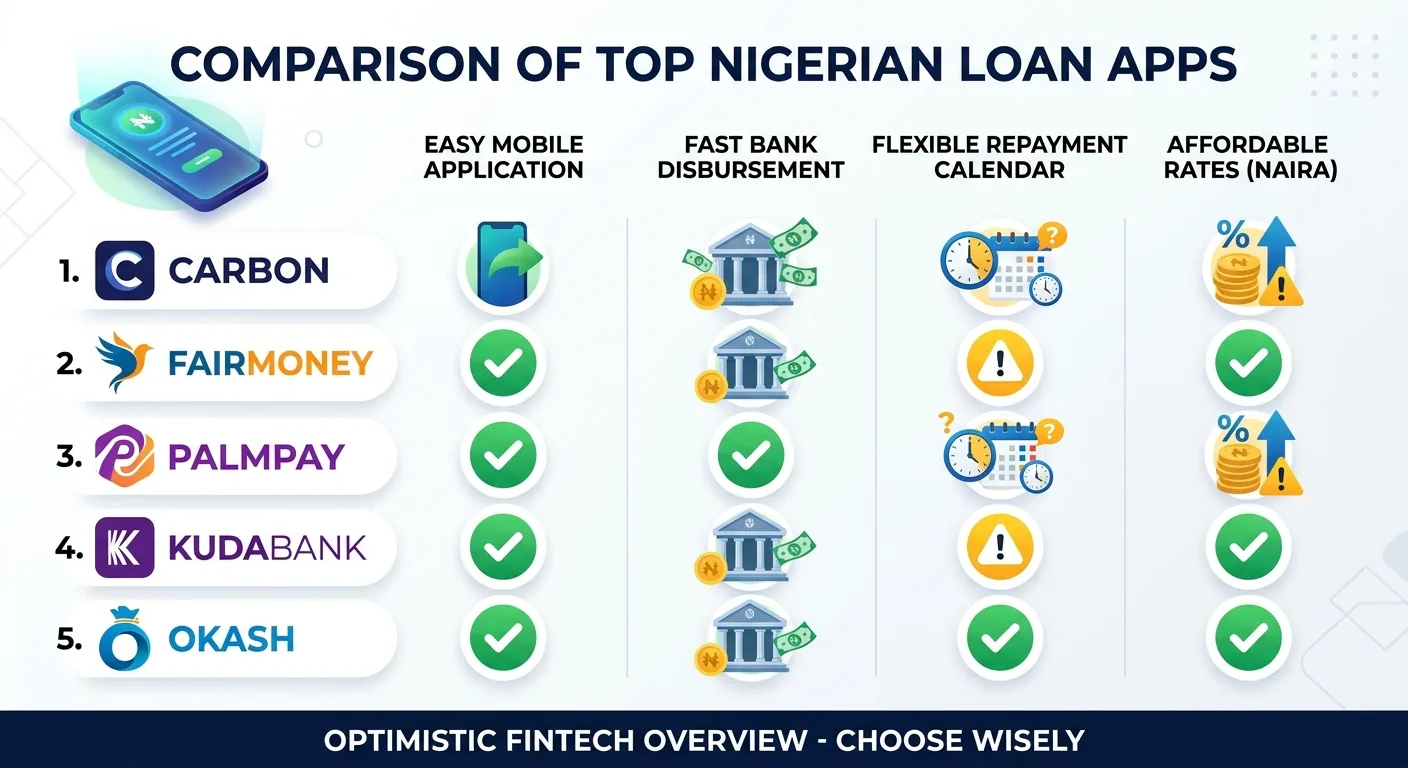
This article breaks down the actual loan app repayment methods Nigeria borrowers deal with across five major platforms — FairMoney, Carbon, Branch, Palmcredit, and Sharp Collect. Not the marketing language. The mechanics.
Why Loan App Repayment Methods Nigeria Borrowers Choose Matter More Than the Interest Rate
Here is a truth most financial content buries: a low-interest loan with aggressive repayment mechanics can wreck your month faster than a higher-interest loan with flexible repayment.
Imagine you earn ₦85,000 monthly. Rent takes ₦30,000. Feeding, transport, and utilities consume another ₦40,000. That leaves ₦15,000 breathing room.
Now a loan app auto-debits ₦22,000 from your account on salary day — before you can move a single kobo toward rent. Your "affordable" loan has just created a genuine crisis.
This is not theoretical. It happens to Nigerians every month. Among all loan repayment options Nigeria 2025 borrowers are navigating, the repayment method — when it hits, how it hits, and whether you have any control — is arguably the most important variable when choosing an app.
The CBN's consumer protection framework requires lenders to disclose repayment terms clearly. Few borrowers read them before clicking "accept."
Auto-Debit: The Silent Account Sweep
Almost every regulated loan app in Nigeria uses some version of auto-debit — also called direct debit or mandate. When you apply, buried in the terms, you authorize the lender to debit your linked bank account on the due date without sending you a "ready?" message first.
This is legal. The CBN permits it. But the difference between apps lies in four things:
- How much notice they give before debiting
- Whether they attempt partial debit if the full amount is unavailable
- What happens when the debit fails
- Whether you can manually repay ahead of time to cancel the auto-debit
This is exactly what makes understanding loan app repayment methods Nigeria platforms use so critical before you sign anything.
FairMoney — How They Collect Their Money Back
FairMoney is widely used among salary earners and low-income workers across Nigeria.
Primary Method: Auto-debit on the due date, linked to your BVN-verified account.
Notice Period: FairMoney typically sends SMS and in-app reminders 3 to 5 days before repayment is due — better than average among Nigerian apps.
Manual Repayment Option: Yes. FairMoney allows you to repay manually via their app (debit card or bank transfer) before auto-debit activates. If you repay manually, the auto-debit is cancelled for that cycle. This is a genuine safety valve.
Failed Debit Behavior: If your account has insufficient funds, FairMoney retries within the same window and begins charging penalty fees while escalating contact frequency.
Verdict: The manual repayment window gives you real control over your salary account on payday.
Carbon — The Most Structured Repayment System
Carbon (formerly Paylater) has been in the Nigerian market long enough to build a relatively transparent repayment architecture.
Primary Method: Auto-debit. Carbon also integrates with its own digital bank — if you bank with Carbon, deductions are seamless, which is both a convenience and a risk.
Notice Period: Carbon sends reminders at 7 days, 3 days, and 1 day before repayment. Among all five apps, Carbon's pre-debit communication is the strongest.
Manual Repayment Option: Yes. Carbon allows early repayment through the app, and in some cases early repayment reduces total interest owed — verify this on your specific loan offer.
Failed Debit Behavior: Carbon flags missed repayments quickly and reports to credit bureaus — CRC and FirstCentral — faster than most apps. A missed Carbon payment is a credit score event, not just a penalty fee.
Verdict: Carbon is disciplined and structured. But if your salary timing is inconsistent — common for civil servants whose pay sometimes arrives late — Carbon's credit reporting speed makes it unforgiving. Align your repayment date with actual salary arrival, not official payday.
Branch — Repayment Flexibility or Hidden Pressure?
Branch entered Nigeria from the US fintech market with a digital-first repayment experience.
Primary Method: Auto-debit via card mandate or account mandate linked at registration.
Notice Period: Branch sends reminders, but timing can vary. Some users report alerts only 1 to 2 days before debit — tighter than ideal if your salary has not cleared yet.
Manual Repayment Option: Yes. Branch allows repayment through the app via card or bank transfer. The interface is clean and straightforward.
Failed Debit Behavior: Branch is relatively measured with failed debits, but repeated failures trigger account restriction — your credit limit drops or disappears entirely. Branch uses alternative data to monitor your financial behavior. The algorithm notices irregular activity around due dates.
Verdict: Branch works well for people with predictable income timing. If your account runs low around due dates, your future borrowing access pays the price — quietly.
Palmcredit — Rolling Deductions and What They Do Not Announce
Palmcredit uses a revolving credit line model for many products, which makes its loan app repayment methods Nigeria borrowers must understand more complex than a simple "borrow once, repay once" structure.
Primary Method: Auto-debit on due date, linked to your registered bank account.
Notice Period: Palmcredit's reminder system is functional but less consistent than Carbon or FairMoney. Some users report shorter notice windows.
Manual Repayment Option: Yes. Given the revolving nature of some Palmcredit products, manually tracking and repaying your outstanding balance is especially important — do not rely solely on auto-debit.
Failed Debit Behavior: Palmcredit charges daily penalties on overdue amounts. Because fees compound quickly, a loan unpaid for even 5 to 7 extra days can grow meaningfully beyond the original repayment amount.
Verdict: Palmcredit's speed and accessibility are genuine strengths. But the daily penalty structure means you cannot afford to be casual about due dates. Set a reminder the moment the loan hits your account.
Sharp Collect: The Most Structured Repayment System
Sharp Collect has operated in Nigeria long enough to develop a clear, predictable way of collecting repayments.
Main method: Automatic debit from your linked account.
Reminders: You get alerts three, two, and one day before the due date.
Manual repayment: Available. You can pay early inside the app, and on some loans this lowers the total interest you owe. Check your own loan offer to confirm.
Verdict: Of the five apps reviewed, Sharp Collect is the easiest to use. Being able to repay manually keeps you in control of your salary account on payday.
What Happens When Auto-Debit Fails
When an auto-debit fails — meaning insufficient funds on the due date — here is the typical domino effect:
- Penalty fees begin accruing — daily or one-time, depending on the app
- Reminder messages intensify — calls, SMS, in-app notifications
- Credit bureau reporting begins — especially Carbon and Branch
- Future borrowing access is reduced or frozen
- Contact escalation to the emergency contacts you provided at registration
A failed auto-debit is never a neutral event. It costs you money and costs you creditworthiness. Understanding loan app repayment methods Nigeria platforms operate before borrowing — not after — is non-negotiable.
How to Protect Your Salary Account During Repayment
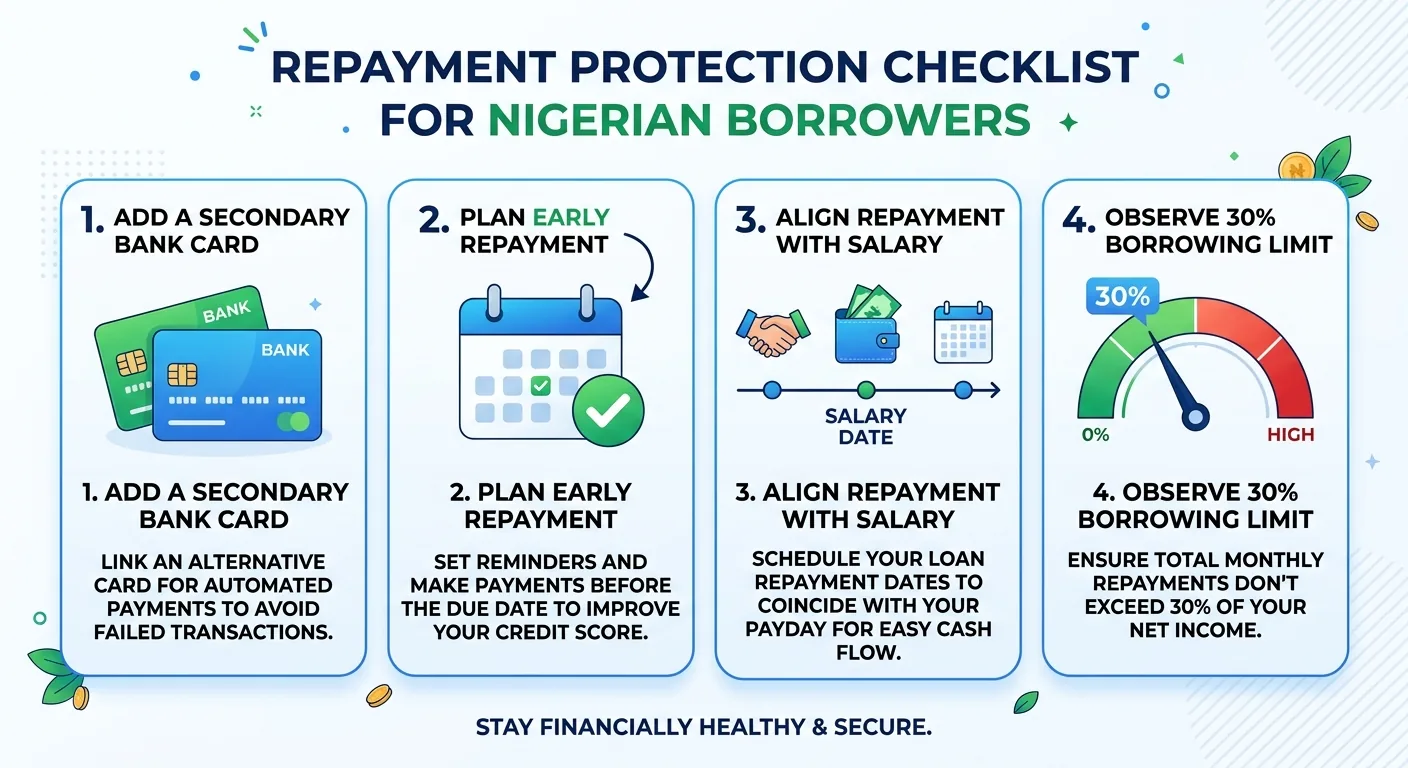
Step 1 — Use a secondary account for loan apps. Link a different account to loan apps where possible. Transfer the repayment amount there before the due date.
Step 2 — Repay manually, early. Do not wait for auto-debit. If funds are available 2 to 3 days before the due date, repay through the app manually. This cancels the auto-debit and puts you in control.
Step 3 — Align repayment dates with actual salary arrival. If your salary arrives on the 27th but your due date is the 25th, you have a structural problem. Most apps allow you to choose your due date at disbursement — match it to reality.
Step 4 — Never borrow more than 30% of your monthly take-home. This is the ceiling that keeps how loan apps collect repayment Nigeria style from swallowing your entire budget.
Practical Repayment Tracker: What Every Borrower Should Record
Before you collect any loan, screenshot or write down these five items:
| Item | Detail |
|---|---|
| Loan Amount Received | ₦_ |
| Total Repayment Amount | ₦_ |
| Due Date | _ |
| Repayment Method | Auto-debit / Manual |
| Penalty Rate if Late | ₦_ per day or % |
Many Nigerians lose track of due dates simply because they never recorded them. This personal loan card eliminates that problem entirely.
Final Verdict: Which App Gives You the Most Repayment Control?
| App | Notice Period | Manual Repayment | Failed Debit Response | Repayment Control |
|---|---|---|---|---|
| FairMoney | 3–5 days | ✅ Yes | Moderate | ⭐⭐⭐ |
| Carbon | 7–10 days | ✅ Yes | Fast credit reporting | ⭐⭐⭐⭐ |
| Branch | 1–2 days | ✅ Yes | Algorithm-driven | ⭐⭐⭐ |
| Palmcredit | Variable | ✅ Yes | Daily penalties | ⭐⭐⭐ |
| Sharp Collect | 1-3 days | ✅ Yes | Fast credit reporting | ⭐⭐⭐⭐ |
Winner: SharpCollect and Carbon are the most transparent. FairMoney edges ahead for everyday Nigerian borrowers because of its user-friendly notice system and forgiving manual repayment window.
The best loan app repayment methods Nigeria borrowers can access are the ones that give you advance notice, manual repayment options, and clear penalty terms upfront. Before you click "accept loan," spend two minutes reading how and when that money leaves your account. That two minutes can save you from a month of penalty fees and financial stress that follows you past payday.
The app that lends you money fast is not automatically the app that treats you fairly when repayment is due. Know the difference. Collect wisely.
Frequently Asked Questions
Can I stop a loan app auto-debit after I have already agreed to it?
In most cases, you cannot cancel the auto-debit mandate entirely once it is active — but you can override it by repaying manually through the app before the debit date. FairMoney and Carbon both allow this. If you repay the full amount manually before the due date, the auto-debit has nothing left to collect. This is the most practical way to control when and how your account is debited.
Which Nigerian loan app gives the longest warning before debiting my account?
Among the five apps reviewed, Carbon gives the longest advance notice — sending repayment reminders at 7 days, 3 days, and 1 day before the due date. FairMoney comes second with 3 to 5 days of notice. Branch typically sends reminders only 1 to 2 days before debiting, which is the tightest window and the most likely to catch borrowers off guard if salary has not yet cleared.
What happens to my credit score if a loan app auto-debit fails in Nigeria?
A failed auto-debit can trigger credit bureau reporting, depending on the app. Carbon and Branch are the fastest to report missed or failed repayments to CRC and FirstCentral credit bureaus in Nigeria. Once a negative entry appears on your credit file, it can reduce your eligibility for loans from other lenders — not just the app where the debit failed. This is why aligning your repayment date with your actual salary arrival date is critical, not optional.
