

POSTED BY:
COMMENTS:
0
POST DATE:
Every time you collect a loan and ghost the repayment. Every time a loan app deducts from your account. Every time you default on that salary advance you took in January and "forgot" by March — something is recording all of it.
Not just the app. Not just your bank. There is an actual file — a credit report — attached to your BVN. And that file is being quietly shared with lenders across Nigeria every time you apply for a new loan.
You can't see it. Nobody told you it existed. But it exists.
This is your credit score Nigeria — and if yours is bad right now, it could be why that loan app is giving you ₦5,000 when your neighbour collects ₦80,000. It could be why your bank keeps rejecting your consumer loan application. It could be why that salary earner loan you applied for last week said "not eligible."
Sapa is real, but an invisible bad credit file is making sapa worse for millions of Nigerians. Let's fix that today.
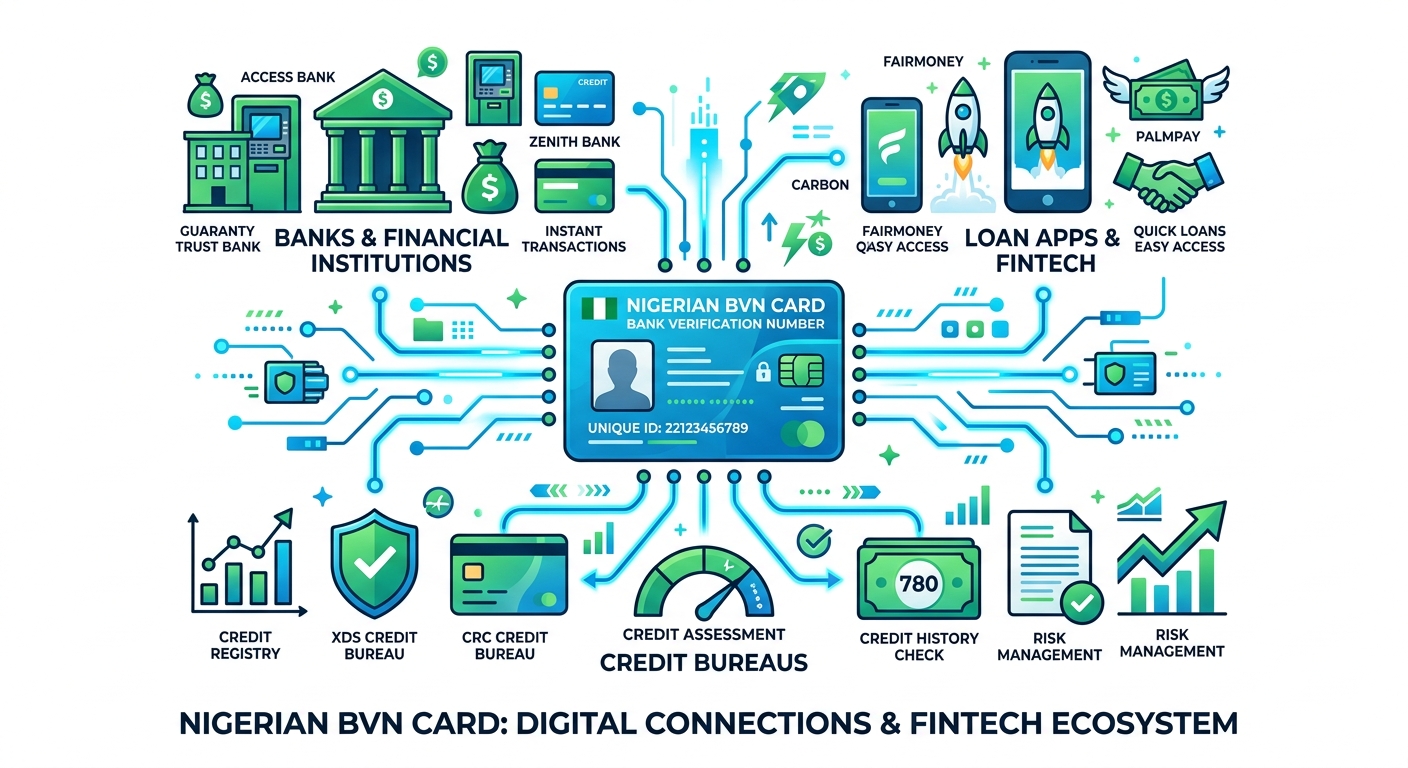
If you've been wondering why your loan limit on Carbon hasn't moved in six months, or why FairMoney keeps showing you ₦3,000 after two years of borrowing — your credit score Nigeria profile is likely sitting at "fair" or "poor" in their internal system. The CRC Credit Bureau report will tell you exactly where you stand.
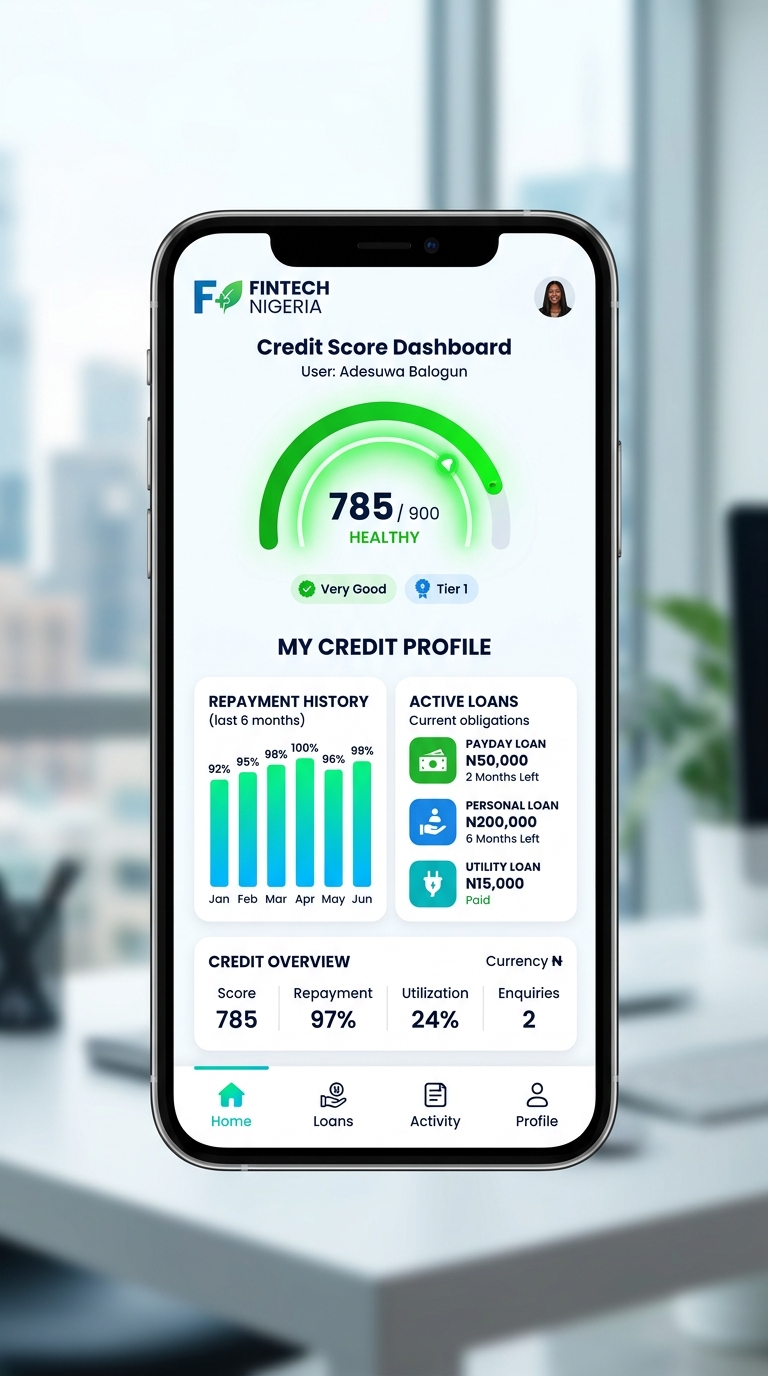
What Is a Credit Score in Nigeria? (Plain English, No Grammar)
A credit score is simply a number that tells lenders how trustworthy you are with borrowed money. In the US, they call it a FICO score and it runs from 300 to 850. In Nigeria, the credit score Nigeria system works slightly differently — but the concept is identical. Credit bureaus collect data about your borrowing behavior and assign you a risk rating. Lenders — banks, microfinance banks, fintech apps — use this rating to decide:- Whether to give you a loan at all
- How much to give you
- What interest rate to charge you
Who Actually Collects Your Credit Data in Nigeria?
Nigeria has three officially licensed credit bureaus operating under the supervision of the Central Bank of Nigeria (CBN):CRC Credit Bureau
The largest and oldest credit bureau in Nigeria. Most major commercial banks — GTBank, Access Bank, Zenith, First Bank — report their loan data to CRC. If you've ever taken a bank loan or used a bank-linked credit product, your data is almost certainly here. Your BVN credit history on CRC is what most formal lenders will pull first.FirstCentral Credit Bureau
FirstCentral is increasingly the go-to bureau for fintechs and microfinance banks. Several licensed loan apps report defaulters to FirstCentral. If your loan app is CBN-licensed, there's a strong chance they're filing your repayment behavior here every month.CreditRegistry
Another CBN-licensed bureau. Less commonly discussed but actively used by some cooperative societies and smaller lenders operating across Lagos, Abuja, and Port Harcourt. The critical point: You may have a file with all three bureaus, just one of them, or none at all — depending on which lenders you've used. And any lender can check any of them when evaluating your application. Your credit report Nigeria profile could look different across all three.What Damages Your Credit Score Without You Knowing
This is where it gets expensive. Most Nigerians damage their credit score Nigeria profile without even realising it. Here are the biggest culprits:① Defaulting on Loan App Repayments
Every licensed loan app — Carbon, FairMoney, Branch, Renmoney, Creditville — is required by CBN to report loan defaults to credit bureaus. When you borrow and don't pay, it goes on your record. Even if the amount is ₦5,000. Especially if the amount is ₦5,000, because those small defaults accumulate fast.② Borrowing From Multiple Apps at Once
This is called overlapping debt, and it is a massive red flag to lenders. If a lender pulls your credit report and sees you currently have active loans with four different apps, they will either reject you outright or slash your limit to the floor.③ Making Late Repayments Repeatedly
It's not just about whether you pay — it's about when you pay. Consistent late payments signal that you are unreliable. Even if you eventually clear everything, a pattern of late payment is a permanent blemish on your BVN credit history.④ Closing Old Credit Accounts Too Quickly
If you have an old account with a bank or fintech that shows a clean repayment history, closing it removes positive history from your profile. Lenders want to see length of credit history — the longer and cleaner, the better your credit score Nigeria position.⑤ Applying for Too Many Loans in a Short Period
Each time a lender does a "hard inquiry" on your credit report — which happens when you formally apply for a loan — it leaves a mark. Too many inquiries inside 30–60 days signals desperation and actively lowers your score.What a Good vs. Bad Credit Profile Looks Like in Nigeria
Here's how lenders practically classify Nigerian borrowers:| Credit Profile | What It Means | What Lenders Do |
|---|---|---|
| Clean/Excellent | No defaults, consistent on-time repayments, manageable debt load | Approve higher limits, offer lower interest rates |
| Fair | One or two late payments, minimal defaults | Approve with caution, moderate limits |
| Poor | Multiple defaults, overlapping loans, irregular repayment history | Severely reduced limit or flat rejection |
| Negative/Blacklisted | Unresolved defaults reported by multiple lenders | Rejected by virtually all formal lenders |
How to Check Your Own Credit Report in Nigeria (Step-by-Step)
Good news: You have a legal right to check your own credit report Nigeria file. Here's exactly how to do it:Option 1: CRC Credit Bureau
- Visit crc.com.ng
- Click on "Individual Credit Check"
- Fill in your personal details including your BVN and a valid means of identification
- Pay the access fee — typically between ₦1,000 and ₦3,500 depending on the report type
- Download and review your full report
Option 2: FirstCentral Credit Bureau
- Visit firstcentralcreditbureau.com
- Register or log in as an individual consumer
- Request your Consumer Credit Report
- Pay the applicable fee and download your report
Option 3: Through Your Commercial Bank
Some banks — Access Bank and GTBank included — now offer credit report checks through their mobile apps or internet banking dashboards. Call your bank's helpline and ask specifically about credit report access. Pro tip that most Nigerians don't know: Under CBN regulations, you are entitled to one free credit report per year from each licensed bureau. When you contact them, ask specifically for the free annual consumer report before paying anything. Once you have your report, check for: - Any loans listed that you never took (possible fraud or BVN-linked identity error) - Any defaults that were already resolved but are still showing as outstanding - The total count of active credit lines currently sitting against your name If your report shows problems, platforms like SharpCollect help you understand debt recovery processes and what legitimate lenders can and cannot do with your information — critical reading before you engage with any bureau dispute.
How to Repair a Bad Credit History — Practical Steps
If your report shows damage, don't panic. You can fix a bad credit score Nigeria profile, but it requires time and consistency. There are no shortcuts, and anyone selling you a "credit repair" service that promises overnight fixes is scamming you.Step 1: Pay Off All Outstanding Defaults
Start with the oldest or the most damaging entries. Contact the lender directly and confirm repayment in writing. Critically — ask them in writing to report the settled repayment update to the credit bureau. Many lenders drag their feet on this step.Step 2: Dispute Errors on Your Report
If you spot a loan you never took, or a default marked as unpaid when you already settled it, file a formal dispute. Contact the credit bureau with evidence — bank statements, repayment receipts, or a loan closure letter from the lender. The bureau is legally obligated to investigate within 30 days.Step 3: Stop Applying for Multiple Loans Simultaneously
Give your credit report Nigeria file time to breathe. Pick one lender, build a clean repayment track record with them, then gradually expand. Every simultaneous application is a hard inquiry that sets you back.Step 4: Start Small, Be Consistent
Take a small loan you can repay without stress. Pay it back two days before the due date. Repeat this three or four times. This is the unglamorous but genuinely effective way to rebuild positive signals on your credit file and steadily improve your credit score Nigeria standing.Step 5: Be Patient With the Timeline
Negative entries don't live forever. Under Nigerian credit bureau regulations, most default records are removed after a maximum reporting period of 5–7 years. Resolved defaults are updated — but only when lenders actually file the update, so follow up aggressively.How to Build Credit From Zero (For NYSC Members, Students, and New Workers)
If you've never borrowed through a formal channel, your credit score Nigeria file is essentially blank. That sounds safe — it's actually a liability. Lenders can't assess your risk, so they default to the lowest possible limits. Here's how to build from scratch intelligently:Start With a Small Licensed Loan App Loan
Borrow an amount you absolutely don't need — ₦5,000 to ₦10,000. Keep it sitting in your savings account untouched. Repay it two days before the due date. Do this three times. You've created a clean repayment history at nearly zero financial risk to yourself.Leverage Salary Account Lending Features
GTBank's QuickCredit and Access Bank's QuickBucks extend small credit lines to salary account holders. Having your NYSC allawee or salary paid directly into your account and maintaining a clean repayment record on any overdraft builds your BVN credit history organically.Join a Cooperative With Credit Reporting
If your workplace or professional association runs a cooperative society, taking small managed loans through it can build credit history — especially if that cooperative reports to one of the three licensed bureaus. Ask your cooperative secretary directly before borrowing.Avoid Informal Lenders for Credit-Building
Moneylenders, susu, ajo groups — helpful for emergency cash, but they report to nobody. They contribute exactly zero to your formal credit score Nigeria history. Use them for liquidity, not credit building. For NYSC members specifically, understanding how financial documentation works — including what happens when a debt collector contacts you — is covered in detail at SharpCollect, where Nigerian debt recovery rules are broken down clearly.Why Your Credit Score Nigeria Profile Matters More Than You Think in 2025
Nigeria's formal lending infrastructure is expanding at a pace most salary earners haven't caught up with. The CBN's financial inclusion push means more lenders, more data sharing, and more automated credit decisions. In 2025, this matters beyond just loan approvals:- Employers in financial services are running credit checks as part of background verification for new hires. A negative credit score Nigeria file can cost you a job offer.
- BNPL (Buy Now Pay Later) services are expanding across Nigerian e-commerce platforms. Your credit history will gate your access to these products.
- Government credit schemes — SME loans, agricultural credit, youth enterprise funds — increasingly use bureau data to screen applicants.
- Mortgage and rent financing products being piloted by fintechs and banks will use your credit file as the primary filter.
