

Using multiple loan apps Nigeria borrowers stack every month sounds clever until payday arrives and your account hits zero before you can buy breakfast.
This is not a lecture. It is a warning built on real numbers — the kind sharp Nigerians wish they had read before opening that third app.
What Actually Happens When You Borrow From Multiple Loan Apps at Once
The logic sounds reasonable: if one app gives you ₦30,000 and another gives ₦25,000, you have ₦55,000 to work with. Problem solved.
Wrong.
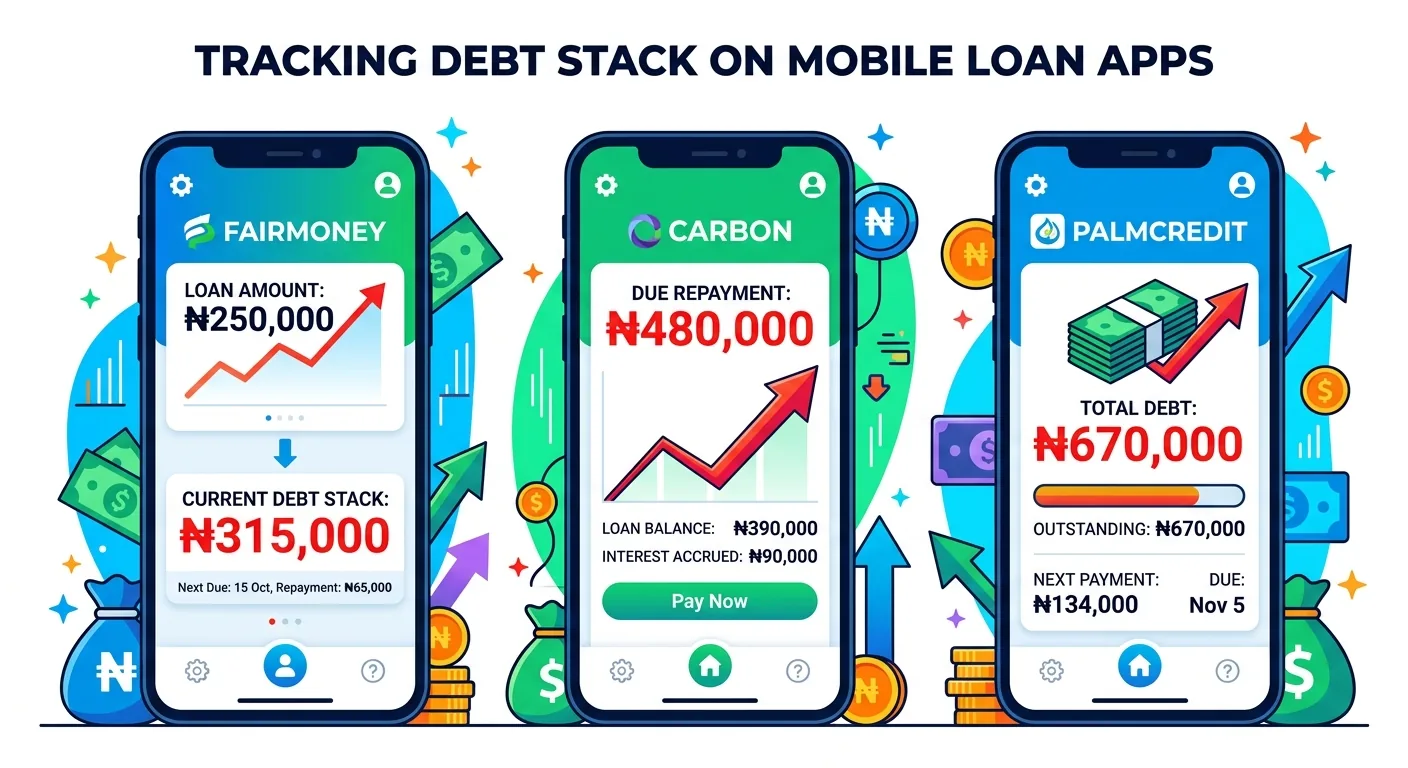
When you use multiple loan apps Nigeria salary earners juggle simultaneously, you create what analysts call a debt stack — multiple repayment obligations with different due dates, different interest rates, and different penalty structures, all pointing straight at your payday.
Here is a real example for someone earning ₦80,000 per month:
- FairMoney loan: ₦30,000 borrowed → ₦35,400 to repay in 30 days
- Carbon loan: ₦25,000 borrowed → ₦28,750 to repay in 30 days
- Palmcredit loan: ₦15,000 borrowed → ₦17,850 to repay in 14 days
Total repayment pressure in one month: ₦82,000.
That is already more than your entire salary. Food, transport, data, and every other human expense still remain.
This is not sapa. This is financial quicksand.
How FairMoney, Carbon, Branch, Palmcredit and Sharp Collect Already Know You Are Multi-Borrowing
Here is what shocks most people: these apps talk to each other — through the same credit bureaus.
Nigeria operates three main credit bureaus: CRC Credit Bureau, First Central Credit Bureau, and Credit Registry. When you take a loan from any CBN-licensed or FCCPC-registered app, that loan is reported to at least one bureau.
This means when FairMoney checks your credit, they may already see your active Carbon obligation. When Branch reviews your application, your Palmcredit debt is visible. When Sharp Collect evaluates your profile, your full debt-to-income ratio is on display — even if you never mentioned the other apps.
Beyond bureaus, these apps also analyse your SMS alerts, your bank statements, and — buried inside those terms and conditions you scrolled past — your installed app list.
What happens when they catch multiple loan apps Nigeria stacking behaviour?
- Your loan limit drops immediately
- Your approval rate falls
- Your interest rate increases because you are now classified as higher-risk
The apps are not naive. They built their risk models specifically to catch this pattern.
The Real Cost of Running Multiple Loan Apps Simultaneously
Most Nigerian loan apps charge between 4% and 30% monthly interest, depending on tenure and your credit profile. Here is what stacking looks like:
| App | Loan Amount | Monthly Rate | Repayment |
|---|---|---|---|
| FairMoney | ₦30,000 | ~18% | ₦35,400 |
| Carbon | ₦25,000 | ~15% | ₦28,750 |
| Palmcredit | ₦15,000 | ~19% | ₦17,850 |
| Total | ₦70,000 | — | ₦82,000 |
You borrowed ₦70,000. You are repaying ₦82,000. That is ₦12,000 evaporated in interest and fees in a single month.
Now add late payment penalties. On most apps, defaulting by even five days attracts penalties ranging from 1% to 5% of the outstanding amount per day in some cases. Your ₦12,000 interest bill can balloon to ₦22,000 very quickly.
For a civil servant or low-income earner, ₦22,000 disappearing in a single month is not a rounding error. That is three weeks of groceries. That is school fees. This is why the multiple loan apps Nigeria problem is really a cost problem, not just a discipline problem.
What Happens to Your BVN Credit Profile
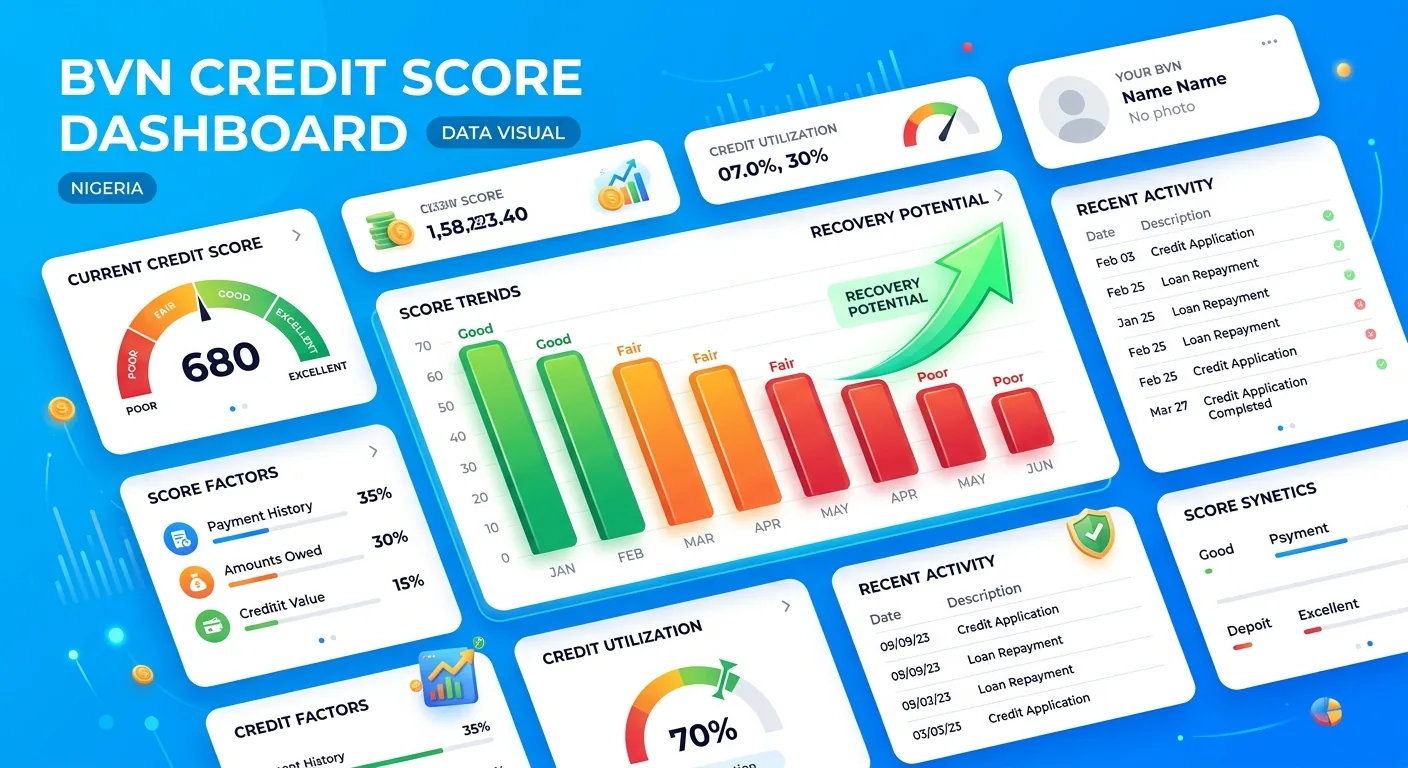
Your BVN is your financial identity in Nigeria. Every loan, every default, every late payment — permanently attached to that 11-digit number.
First, your credit utilisation ratio shoots up the moment you carry concurrent loans. This signals to every lender that you are financially stretched, even if repayments are still coming in on time.
Second, if even one active loan goes into default, it damages your credit history across all platforms. You do not get to default on Carbon while keeping your FairMoney record spotless. The bureaus see the complete picture.
Third, your future borrowing capacity shrinks. Apps that might have offered ₦50,000 as a new customer will now offer ₦15,000 — or reject you outright — because your history shows multiple loan apps Nigeria stacking.
This long-term BVN damage is what most borrowers never consider during the emergency moment when they are opening that second or third app.
Which Apps Are Hardest to Juggle Simultaneously
Not all apps respond to multi-borrowing identically.
Carbon has one of the more sophisticated credit analysis systems among Nigerian loan apps. They integrate deeply with credit bureaus and run detailed bank statement analysis. Very difficult to hide concurrent borrowing from Carbon.
FairMoney runs algorithms trained on millions of Nigerian borrower profiles. They have grown increasingly cautious about approving borrowers with visible concurrent obligations, especially after CBN tightened digital lending oversight.
Branch connects to international credit risk infrastructure. Their system is particularly effective at detecting risk patterns inside bank transaction histories.
Palmcredit can appear more lenient at initial approval — but their collections process becomes aggressive very quickly once repayment is missed. Borrowers juggling multiple loan apps Nigeria tend to feel Palmcredit's recovery pressure first and hardest.
Sharp Collect operates under FCCPC compliance requirements and is increasingly integrating with bureau reporting systems.
The bottom line: none of these apps are blind. The ones that seem lenient upfront compensate with higher rates, lower limits, and harder collections on the back end.
The Salary Earner's Danger Zone: When Repayments Stack on Payday
This is the cruelest part of the multiple loan apps Nigeria trap for salary earners and civil servants.
Nigerian salaries typically arrive at month-end or beginning of the next month. Loan apps know this — and they set repayment due dates to align with Nigerian payday cycles so their debit hits the moment salary lands.
Imagine three apps all programmed to debit your account on payday. Your ₦80,000 salary arrives. Within hours:
- FairMoney takes ₦35,400
- Carbon takes ₦28,750
- Palmcredit attempts ₦17,850
If the full debit succeeds, you have ₦0 left with a full month to survive.
If the debit fails because your account cannot cover all three, you trigger late payment penalties across multiple platforms simultaneously. Now you are drowning in compound interest from three different directions at once.
This is not hypothetical. Repayment failures from concurrent loan obligations are among the top triggers of complaint escalations against loan apps reported to the FCCPC. This is happening to thousands of Nigerian workers every single month.
Is Multi-Borrowing Ever Justified? An Honest Answer
There are genuine emergencies — a medical bill, a sudden eviction, a funeral — where borrowing from two sources simultaneously might be the only option. That is real life, and nobody should pretend otherwise.
If you are in that situation, here is what separates a recoverable decision from a catastrophic one:
- Borrow only what your next salary can clear with breathing room — not "almost" what it covers, but with room to spare
- Clear the smallest loan first rather than spreading thin payments across all apps
- Communicate early with any app where you foresee difficulty — Carbon, specifically, has restructuring options most borrowers never request
- Never borrow Loan C to pay Loan A — that is the beginning of a debt spiral very few Nigerians exit easily
Using multiple loan apps Nigeria offers is sometimes unavoidable. But it must be a crisis response — never a monthly habit.
The Smarter Strategy: One App at a Time
The most financially resilient Nigerian borrowers share one consistent habit: they pick one loan app, use it responsibly, and build their limit upward deliberately.
This works because your credit profile on a single platform strengthens with every successful repayment. FairMoney, Carbon, and Branch have all been documented giving long-term customers access to ₦200,000 to ₦500,000 borrowing ranges. Your interest rate decreases as your trust score improves. Your BVN record stays clean.
Loyalty to one responsible lender gives you more financial power over time than juggling multiple loan apps Nigeria simultaneously and burning your credit profile across all of them.
Final Warning: What Nigerians Learn Only After the Damage Is Done
By the time most people recognise the damage from stacking multiple loan apps Nigeria simultaneously, it has already compounded beyond easy repair.
The BVN is flagged. The credit profile is bruised. The salary is committed to repayments before it even arrives. Apps that once offered ₦50,000 now offer ₦8,000 — or reject outright.
FairMoney, Carbon, Branch, Palmcredit, and Sharp Collect provide a genuinely useful service for Nigerians who need urgent credit access. The problem is never the apps. The problem is using multiple loan apps without a repayment plan that actually works.
Before you open that second loan app tonight, ask yourself one honest question: Can my next salary clear everything I currently owe across all platforms and still leave me enough to eat?
If the answer is no — put the phone down.
Frequently Asked Questions
Can Nigerian loan apps actually see if I have borrowed from another app?
Yes. Most CBN-licensed and FCCPC-registered loan apps report to Nigeria's credit bureaus — CRC Credit Bureau, First Central Credit Bureau, and Credit Registry. When you apply for a new loan, the app checks these bureaus and can see your existing active loan obligations from other platforms. Some apps also analyse your bank statement SMS alerts and installed app data to detect concurrent borrowing.
Does borrowing from multiple loan apps in Nigeria damage my BVN permanently?
Not always permanently — but the damage can be long-lasting. Carrying multiple simultaneous loans raises your credit utilisation ratio and flags you as higher-risk across platforms. If any single loan defaults, it affects your bureau record linked to your BVN. Consistent responsible repayment over time can rebuild your credit profile, but the process takes months, not days.
Which is worse: missing one repayment or using multiple loan apps at once?
Both are harmful, but in different ways. Missing a repayment on one app triggers immediate penalties and bureau reporting. Using multiple loan apps simultaneously creates compounding risk — higher interest exposure, payday debit stacking, and a credit profile that signals distress to all future lenders at once. If forced to choose the lesser risk, a single missed payment on one app is typically easier to recover from than a complete debt stack collapse across three or four platforms simultaneously.
